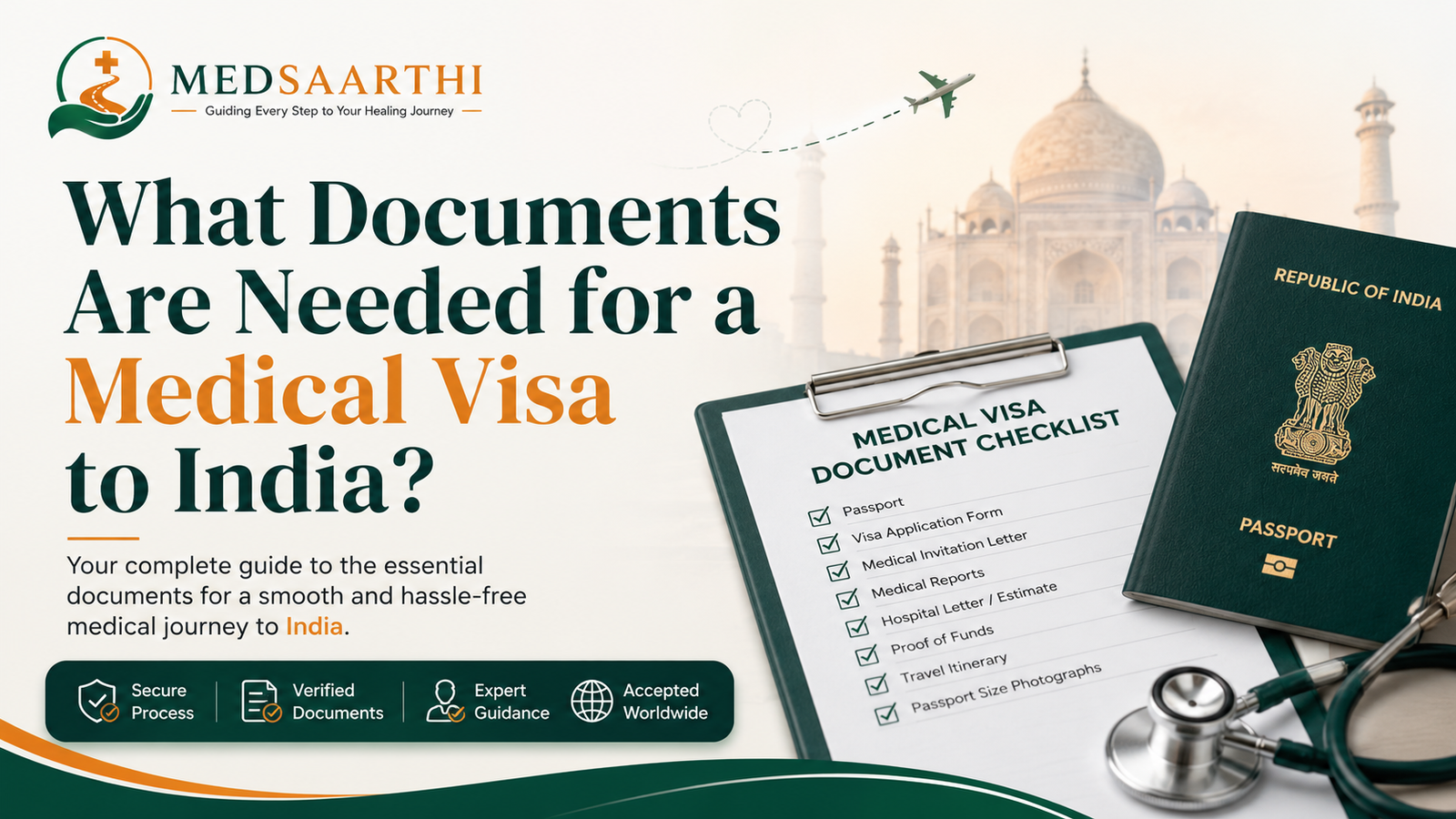
Travelling to India for medical treatment involves more than choosing a hospital and booking a flight. For international patients, understanding the medical visa requirements for India and preparing the appropriate documents is an important part of planning the journey.
India welcomes international patients seeking medical treatment across a wide range of specialties. However, visa requirements can vary depending on the patient's nationality, purpose of travel, duration of stay and current Indian government regulations.
If you are planning medical tourism in India, this guide explains the commonly required documents and the important steps you should understand before applying for a medical visa.
What Is a Medical Visa for India?
An Indian medical visa is intended for eligible foreign nationals travelling to India for medical treatment, consultation or other permitted healthcare purposes.
The visa category, eligibility and supporting documents depend on the applicant's circumstances and the current rules applicable to their nationality.
Before making travel arrangements, patients should always check the latest requirements through the official Indian visa or immigration authorities.
What Documents Are Required for a Medical Visa to India?
The exact checklist can vary, but an international patient applying for an India medical visa may commonly be asked to provide documents such as:
- A valid passport meeting the applicable validity and blank-page requirements.
- A completed medical visa application submitted through the applicable official process.
- A recent passport-size photograph or photograph meeting the application specifications.
- Medical documents, reports or previous treatment records relevant to the patient's condition.
- Documentation or a letter from the Indian hospital or healthcare provider where treatment is planned, where applicable.
- Proof of the purpose of travel and proposed medical treatment, where required.
- Additional documents requested by the relevant Indian mission or visa authority based on the applicant's nationality and circumstances.
This is a general guide rather than a universal visa checklist. Requirements can change, so applicants should verify the current document list before submitting their application.
1. Valid Passport
Your passport is one of the most important documents for an international medical journey. It should meet the validity requirements applicable to your visa application and contain the required blank pages.
Make sure the personal information on your passport matches the information entered in your visa application.
2. Medical Reports and Treatment Records
Medical reports can help the hospital or specialist understand your existing medical condition and treatment history.
Depending on your case, these may include diagnostic reports, scans, laboratory reports, prescriptions, discharge summaries or previous treatment records.
Keeping your medical records organized before travelling can also make communication with the healthcare team easier.
3. Hospital or Medical Treatment Documentation
Depending on the applicable visa process, applicants may need documentation showing that they are travelling to India for medical treatment.
This may include communication or documentation from the Indian hospital or healthcare provider where the patient intends to seek treatment.
The exact format and requirements should be confirmed with the relevant Indian visa authority and the healthcare provider.
4. Medical Visa Application
Applicants need to complete the appropriate visa application and provide information requested during the application process.
Always enter your personal, passport and travel information carefully. Inaccurate or inconsistent information can create unnecessary delays or complications.
Understand Your Requirement
Identify the treatment or medical consultation you are travelling to India for.
Organize Medical Records
Keep your reports, prescriptions and previous treatment records ready.
Check Visa Requirements
Verify the latest requirements applicable to your nationality and situation.
Prepare for Your Journey
Once your travel plans are confirmed, organize accommodation, airport pickup and other support.
Does a Medical Attendant Need a Separate Visa?
International patients may sometimes travel with a family member or another person providing assistance. India has provisions for medical attendants, subject to the applicable visa rules.
The eligibility, visa category and documentation for a medical attendant visa for India can depend on the patient's visa and the attendant's circumstances.
Patients travelling with an attendant should check the current requirements before making travel arrangements.
Can You Apply for a Medical Visa Before Choosing a Hospital?
Your medical travel planning should ideally begin with understanding your healthcare requirement and exploring an appropriate hospital or specialist.
International patients may first seek a medical opinion or communicate with an appropriate healthcare provider before finalizing their treatment plans.
If you are still deciding where to seek treatment, read: How Should You Choose a Hospital in India?
Why Are Medical Reports Important Before Travelling?
Medical reports are useful not only for your visa and travel preparation but also for helping healthcare professionals understand your medical history.
If you are seeking treatment in India, keeping your important medical records organized can help you communicate your healthcare needs more effectively.
What Happens After Your Medical Visa Is Approved?
Once your travel arrangements are confirmed, there are several practical aspects of an international medical journey that may need attention.
Depending on your requirements, these may include airport pickup, accommodation, local transportation, interpreter support and coordination with the healthcare provider.
Can a Medical Tourism Company in India Help With the Process?
A medical tourism company in India or healthcare facilitator can help international patients coordinate different non-clinical aspects of their medical journey.
This may include helping patients understand the process, communicating with healthcare providers, coordinating travel-related services and providing support during their stay, depending on the services offered.
MediSaarthi focuses on making the medical travel journey more organized by connecting international patients with appropriate healthcare and travel coordination support.
If you are at the beginning of your medical journey, you can also explore our Medical Opinion support for international patients.
Visa rules, eligibility criteria and required documents can change. The information in this article is provided for general guidance and should not be considered legal or immigration advice. Always verify the latest requirements through the official Indian visa authorities or the relevant Indian mission before applying.
Frequently Asked Questions
What documents are needed for a medical visa to India?
Depending on your nationality and circumstances, you may need a valid passport, visa application, photograph, medical records and documentation related to your planned treatment. Additional documents may also be required.
What is the medical visa process for India?
The process generally involves checking your eligibility, completing the applicable visa application, preparing supporting documents and following the instructions of the relevant Indian visa authority.
Do I need a hospital document for an India medical visa?
Depending on the applicable visa requirements, documentation related to the proposed medical treatment or healthcare provider may be required. Applicants should confirm the current requirements before applying.
Can a family member accompany me to India for treatment?
Eligible medical attendants may be able to accompany a patient under the applicable visa provisions. The attendant should check the current requirements for their specific situation.
Can MediSaarthi help international patients plan their medical journey?
MediSaarthi provides healthcare facilitation and coordination support for international patients, including guidance related to hospitals, travel, accommodation, airport pickup, interpreter support and follow-up coordination.
Don't Know Where to Begin?
Start with a conversation. Let MediSaarthi guide your next step.
Talk to Your Saarthi →